
Foot-and-mouth disease: epidemiological updates
Foot-and-mouth disease (FMD) is a highly contagious viral infection affecting both domestic and wild ungulates. Although it has been reported in Europe since the 16th century and was eradicated in the 1990s, FMD remains one of the most significant diseases impacting the livestock sector worldwide. This is due to its substantial economic burden, arising from direct production losses, the high costs associated with control and eradication measures, and the severe trade restrictions imposed following the loss of “disease-free country” status.
From a regulatory perspective, FMD is classified as a Category A disease under Regulation (EU) 2016/429. Consequently, strict and rigorous prevention and control measures are mandated to prevent its introduction and spread. Such measures are necessary given the continued presence of FMD in regions neighbouring the European continent, which therefore remains at constant risk of reintroduction.
The causative agent, a virus belonging to the family Picornaviridae, is characterised by high genetic variability and the existence of seven immunologically distinct serotypes (O, A, C, Asia 1, SAT 1, SAT 2, SAT 3). Serotype C is now considered to be extinct, with the last reported detections dating back to 2004 in South America and Kenya.
The characterisation of viruses circulating in endemic regions—particularly across large parts of Asia and Africa—has enabled the identification of seven virus pools associated with specific geographical areas, each characterised by different serotypes and topotypes (Figure 1).

Figure 1. Geographic division of endemic areas into FMD virus pools, illustrating the distribution of different serotypes and topotypes
These differences necessitate tailored control strategies and the use of specific vaccines for effective disease management within each pool.
Current epidemiological situation: recent events in Europe
The European Union has historically been considered free from FMD without the use of vaccination, owing to the implementation of rigorous surveillance systems and outbreak management based on a stamping-out policy. The most severe epidemic in recent history occurred in 2001 in the United Kingdom, resulting in substantial economic losses. More than 2,000 farms were affected, over six million animals were culled and disposed of, and extensive cleaning and disinfection procedures were required, with major repercussions for both the agricultural and food sectors.
However, the endemic presence of FMD in neighbouring and bordering countries, as well as across the Middle East, combined with globalised trade and the large-scale movement of people and goods, represents a significant risk for disease-free countries. These factors necessitate maintaining a high level of alertness and strong preparedness for rapid response in the event of an incursion.
In 2025, FMD re-emerged in Europe, first with an introduction in Germany, followed by subsequent outbreaks in Hungary and Slovakia (Girault et al., 2025). The confirmation of the single outbreak in Germany dates to 10 January 2025, involving a buffalo from a herd of 14 animals that died in a nature reserve in the state of Brandenburg, near Berlin. Based on observed lesions, initially suspected to be associated with bluetongue, a FMD virus of serotype O (lineage O/ME-SA/SA-2018) was identified. This strain was closely related to a virus previously detected in an outbreak in eastern Turkey, along the border with Armenia, Azerbaijan and Iran. This lineage originated from Pool 2 (India and neighbouring countries) and spread through independent pathways, causing outbreaks across parts of western Eurasia and the Middle East. German authorities promptly implemented extensive surveillance activities to demonstrate the absence of further spread of the virus in both wild and domestic susceptible animals.
Approximately two months after the German outbreak, additional outbreaks were reported in Hungary and Slovakia (confirmed on 3 March 2025 and 20 March 2025, respectively). Infection was first identified in a large dairy cattle farm in Kisbajcs, Hungary, near the Danube river and close to the Slovak border. The causative virus was identified as serotype O (sub-lineage O/ME-SA/PanAsia-2ANT-10), closely related to viruses detected in Pakistan (2017–2018) and Turkey (2024), and distinct from the strain identified in Germany.
Further outbreaks were subsequently detected in other dairy cattle farms in the region (five in Hungary and six in Slovakia), with the surveillance zone extending into Austrian territory. At present, the three countries affected by the outbreaks have regained their status as FMD-free without vaccination, according to WOAH requirements. Almost one year later, on 15 March 2026, an outbreak was notified in Greece, on the island of Lesbos, involving a farm with 38 cattle and 250 sheep, with nine cattle testing positive. Further diagnostic investigations are currently underway to determine the serotype involved.
These events represent the first outbreaks of FMD in Europe since 2011, when the disease was identified in the Burgas region of Bulgaria. Phylogenetic analyses suggest that both virus incursions in 2025 originated from neighbouring countries; however, the specific pathways through which these two distinct virus strains entered Europe remain unclear. The near-simultaneous introduction of two different FMD virus strains into Europe within a short timeframe, together with the recent incursion in Greece, raises concern and highlights the need to investigate potential common factors that may have increased the risk of disease spread in countries bordering the Europe.
Emergence of SAT serotypes in the Middle East
The Middle East region (epidemiological Pool 3), historically characterised by the circulation of serotypes O, A, and Asia 1, has, in recent years, experienced incursions of SAT serotypes originating from the African continent. These SAT serotypes continue to circulate, now exhibiting characteristics of endemic viruses (Di Nardo et al., 2025). The first incursions of SAT serotypes trace back to 2023, when SAT 2—initially identified in Ethiopia in 2022—spread to the Arabian Peninsula (Bahrain and Oman) before extending into Iraq, Jordan, and Turkey. This virus (SAT2/XIV) had previously been recorded only once, in Ethiopia in 1991, highlighting substantial gaps in surveillance systems for FMD in Africa.
In 2025, there was also an introduction of SAT 1 from Africa. This serotype, identified in Tanzania in 2020, initially entered the Arabian Peninsula (Bahrain, Kuwait) and subsequently spread to Turkey, Iraq, and, according to recent official reports, Cyprus. Phylogenetic analyses of strains identified within Pool 3 revealed the co-circulation of two distinct SAT 1 topotypes (SAT 1/I and SAT 1/III).
The incursion of SAT serotypes, historically confined to the African continent, underlines the dynamic nature of Pool 3, which is subject to virus introductions from both Asia (Pool 2) and Eastern Africa (Pool 4). These events continually influence vaccination strategies within the region, highlighting the limited availability of vaccines against SAT serotypes.
Epidemiological situation in North Africa
In North Africa, several FMD outbreaks have been reported in recent years, caused by viruses typically circulating in Central African regions. In 2025, cases were reported in Egypt involving serotypes A and O, which were not further characterised, as well as the SAT 1/I topotype, the same strain identified in Tanzania and subsequently detected in Kuwait and Turkey.
Since 2018, the region has also experienced the introduction of serotype O/EA-3, with circulation confirmed in early 2025 in Libya, and a serotype O occurrence in Algeria, for which the topotype remains undetermined. In addition to these dynamics linked to incursions from neighbouring countries, it is important to recall that Egypt experienced incursions of O/EURO-SA and A/EURO-SA strains in 2022, which had previously been isolated and characterised only in South America (Pool 7). These unexpected outbreaks were closely monitored due to their potential for further spread across North Africa and the Eastern Mediterranean (Soltan et al., 2022; Hagag et al., 2022).
The continued incursions in North Africa reflect the increase in trade and, more broadly, in the movement of animals, people, and goods. The recent establishment of the Trans-Saharan Road corridor (Figure 2), a new route linking countries south of the Sahara to Algeria and Tunisia, has facilitated mobility and trade.
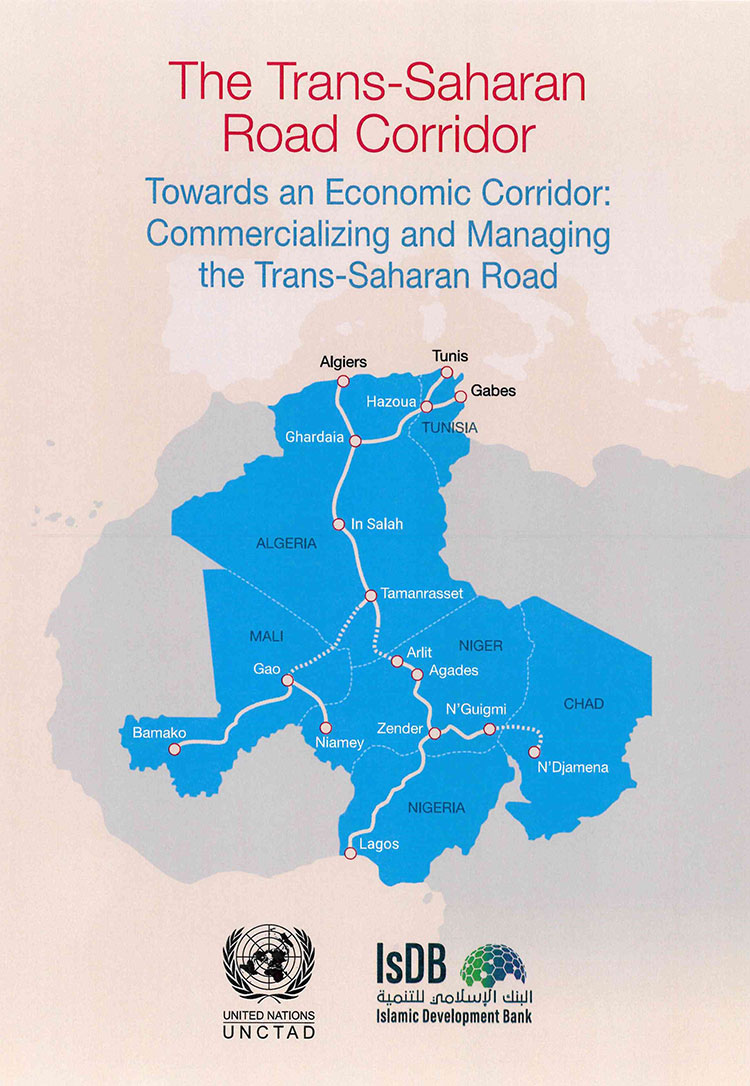
Figure 2. Map showing the route of the Trans-Saharan Road corridor, connecting countries south of the Sahara to Algeria and Tunisia, facilitating animal and trade movements
Alongside these movements, illegal transport of animals and animal products across borders, as well as natural movements of livestock and wildlife in search of better access to food and water, significantly enhance the potential for virus dissemination.
Conclusions
Although the European Union maintains the status as FMD-free area without the use of vaccination, the disease continues to pose both a health and economic threat to Europe, and Italy in particular. The globalisation of markets, the intensification of trade, and the growing interconnection between production systems render the continent structurally vulnerable to potential virus reintroduction. Foot-and-mouth remains one of the most economically significant animal diseases worldwide: even a single outbreak can result in substantial consequences, including export restrictions, movement controls, and compulsory culling.
The recent outbreaks in Germany, Hungary, Slovakia and Greece have highlighted the potential for virus re-emergence even in contexts characterised by high sanitary standards and advanced surveillance and biosecurity systems. Although these outbreaks were contained through the application of European regulatory measures and emergency plans, they revealed a degree of vulnerability and susceptibility to virus introduction. Concurrently, the persistent endemic circulation in the Mediterranean basin and parts of the Near East continues to exert constant epidemiological pressure on Europe’s borders, necessitating sustained levels of alertness and surveillance. In these regions, viral circulation may be facilitated by less structured production systems, heterogeneous vaccination coverage, or limitations in control measures, thereby increasing the likelihood of cross-border spread.
Considering the current context and the multiple factors influencing the epidemiological evolution of the disease, the risk of introduction into Italy should not be underestimated. Despite the effectiveness of the national veterinary system, existing regulatory frameworks, and the diagnostic capacity of reference laboratories, certain characteristics of the country constitute potential vulnerabilities. Italy’s central position in the Mediterranean, the intensity of trade flows, and the high livestock densities in some areas represent significant risk factors that may facilitate rapid virus spread in the event of an introduction.
In this scenario, prevention remains the most effective and sustainable strategy. This includes strengthening clinical surveillance to ensure prompt reporting of any suspected cases, investing in on-farm biosecurity, and providing continuous training for all personnel involved in the sector. Prevention also relies on cooperation among veterinary services, laboratories, farmers, and competent authorities, as well as on the transparent sharing of information at both national and international levels. In conclusion, the favourable current situation should not lead to complacency; rather, it represents the result of a delicate balance that requires constant vigilance, continuous updating of emergency plans, and structural investment in prevention as the primary and most effective means of defence.
References
- Di Nardo, A., Shaw, A. E., Gondard, M., Wadsworth, J., Girault, G., Parekh, K., ... & King, D. P. (2025). Eastern Africa origin of SAT2 topotype XIV foot-and-mouth disease virus outbreaks, Western Asia, 2023. Emerging infectious diseases, 31(2), 368
- Girault, G., Tinak, M., Malik, P., Romey, A., Dirbáková, Z., Relmy, A., ... & Kassimi, L. B. (2025, September). Foot-and-Mouth disease is back in Europe in 2025: cases in Germany, Hungary and Slovakia. In 13th International Congress for Veterinary Virology (ESVV 2025): Including an EPIZONE Session
- Soltan MA, Mahmoud MM, Hegazy Y, Abd-Eldiam MM. Emergence of foot and mouth disease virus, serotype O, Europe–South America topotype in Egypt, 2022. Transbound. Emerg. Dis. 2022;69(5):2409- 11
- Hagag NM, Hassan AM, Zaher MR, Elnomrosy SM, Shemies OA, Hussein HA, et al. Molecular detection and phylogenetic analysis of newly emerging foot-and-mouth disease virus type A, Lineage EURO-SA in Egypt in 2022. Virus Res. 2023;323:198960.
Santina Grazioli e Tiziana Trogu
Centro di Referenza Malattie Vescicolari, Istituto zooprofilattico Sperimentale della Lombardia e dell’Emilia Romagna, Brescia (Italia)
